• Opening Hours : Sunday- Friday, 08:00 am - 05:00pm
  • +1 (780) 200-0308
Enhancing%20Livestock%20Productivity%20&%20Digital%20Health%20Intelligence
  • Home
  • About Us
  • Our Initiative
  • Events & News
  • Students Farm Internship
  • Our Partners
  • Contact

Falling Milk Prices Are Driving Ugandan Farmers from Dairy to Beef

Home / News & Events / Falling Milk Prices Are Driving Ugandan Farmers from Dairy to Beef
  • Sekama Can
  • October 8, 2025

By Rashid Muhoozi, Sekama

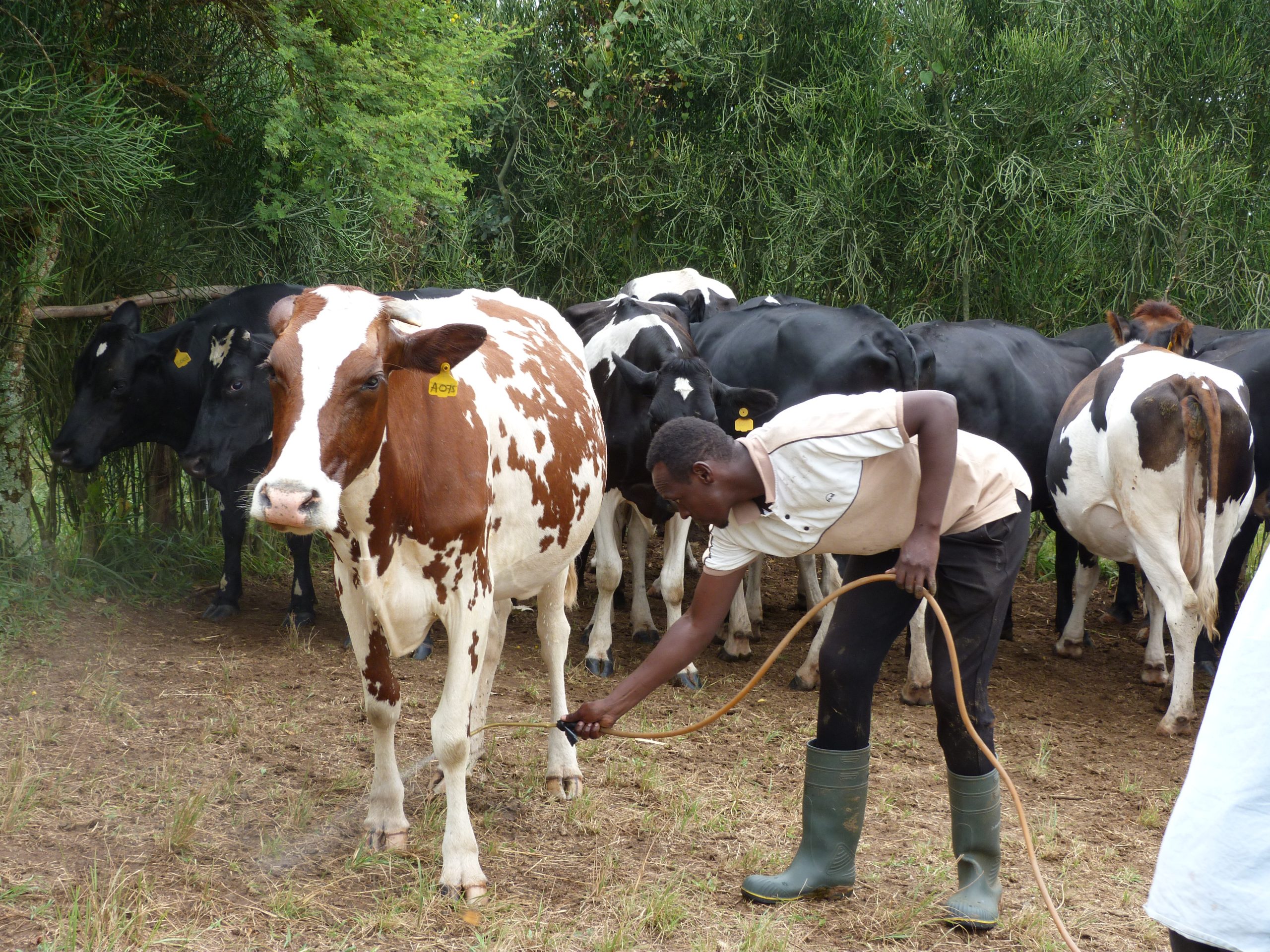
For many Ugandan families, farming has long been a way of life and a source of food. Today, it is also a business, and farmers are choosing ventures that bring steady income. In cattle farming, this choice often comes down to whether to focus on milk or beef.

Across the country, dairy farmers face unstable milk prices that make it hard to earn a profit. During the rainy seasons from March to May and September to December, plenty of pasture and water lead to high milk production. But when supply increases, prices drop sharply. The Dairy Development Authority reports that milk prices can fall to UGX 400 per liter (about $0.11), and sometimes even lower.

These low prices can last for nearly half the year, making dairy farming less attractive. Meanwhile, beef farmers earn more consistent prices for live animals.

Geoffrey, a farm manager in Lwemiyaga, Sembabule District, told Sekama, “Milk prices go up and down too much. After paying for drugs, labor, and pasture, there’s little left. So, we milk once a day and leave the rest for the calves. In six weeks, a calf can sell for about UGX 1.8 million ($500), much more than milk would earn at the same time.”

Other farmers share similar views. “Even in cooperatives, we sometimes get less because of deductions,” said Ambikyire Sam from Sembabule. “Our challenge isn’t low production but low prices when milk floods the market.”

Peter, a farmer in Luwero, added, “I give milk to my workers and sell a few liters for daily needs. I now focus on growing my herd because selling one animal brings better returns.”

Such experiences show a quiet shift among Ugandan cattle farmers from dairy to beef. Unstable milk prices have made dairy farming unreliable, pushing many to raise cattle for meat instead.

At Sekama, we aim to strengthen the dairy sector by helping farmers earn more through market access and value addition. Turning raw milk into products like yoghurt, ghee, cheese, and milk powder can raise incomes and make dairy farming more sustainable.

Tags:

Beef Farming Dairy Sector Challenges Farmer Livelihoods Milk Prices Sustainable Farming Uganda dairy farming Value Addition

Share:

Previous Post
Rotational Grazing:
Next Post
Reflections on

Comments are closed

Recent Posts

  • Digital Health Intelligence
  • Pruning bananas
  • Back at the Farm: Managing Bananas and Starting Something New
  • From Banana Farming to Vegetable Gardening
  • A Morning of Animal Care

Recent Comments

  1. tg99vip on Cactus Sap in Western Uganda: A Traditional Remedy for East Coast Fever in Cattle
  2. inx666 on Smart Feeding, Stronger Herds: The Power of Forage in Dairy Production
  3. q98game on Uganda’s Dairy Sector: Growth and Opportunities
  4. f188game on Canadian Dairy Expertise Comes to Uganda
  5. jiliuucom on Improving Livestock Production in Karamoja Through Better Pasture Management
Enhancing%20Livestock%20Productivity%20&%20Digital%20Health%20Intelligence

The Maple-Crane AgricBoost Initiative is a program of Sekama Can Ltd, a Canadian organization based in Toronto.

Explore

  • About Us
  • Meet Our Team
  • News & Media
  • Services
  • Contact Us
  • Volunteers

Recent Posts

  • 15 February, 2025Sekama AgricBoost Visit & Canada
  • 03 April, 2025Uganda’s Dairy Sector: Growth and

Contact Info

  • Address: 509 - 75 Emmett Avenue, Toronto, Ontario M6M 5A7
  • Email:office@sekama.ca
  • Phone:+1 (780) 200-0308

Copyright 2026 Sekama Can Ltd. All Rights Reserved   Designed by: SPUR Technologies

Enhancing Livestock Productivity & Digital Health Intelligence