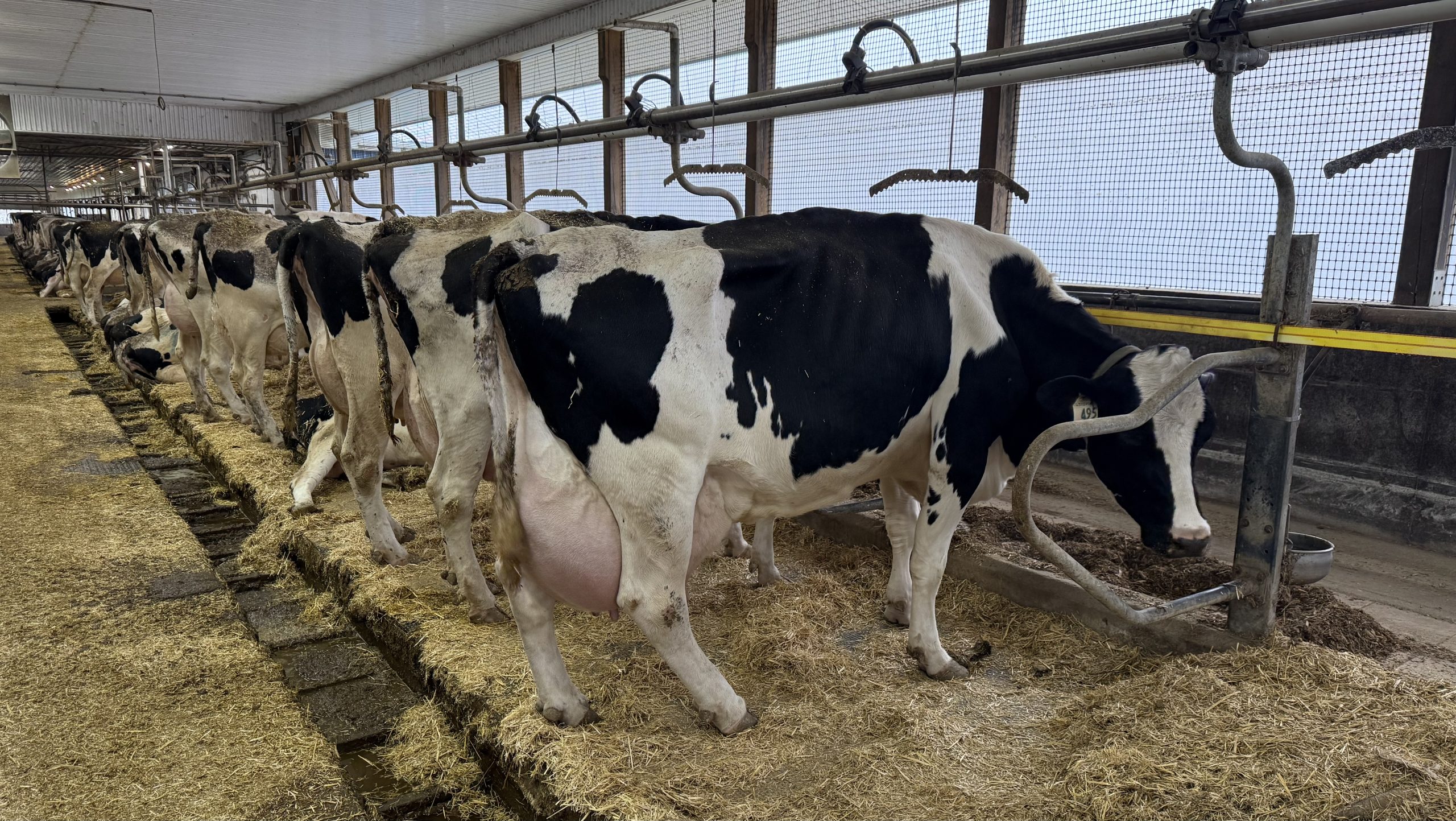
I had the privilege of joining Sekama Canada on a farm tour to Steve and Carol Veldman’s two dairy farms in Embro. This was not only an educational experience but also a clear reinforcement of Sekama’s mission to connect African especially Ugandan farmers with Canadian expertise. Sekema’s shared vision of raising livestock productivity, improving nutrition, feeding systems, strengthening farm management, expanding market opportunities and supporting sustainable dairy development was visible throughout the entire visit.
Succession and Vision for Sustainable Dairy Farming
Steve’s decision to transition his two farms to his sons after more than 40 years of dedicated dairy farming speaks to the importance of long-term planning and sustainability. By empowering Chris and Chad with the responsibility of carrying forward his legacy, he has ensured continuity while encouraging innovation and modernization. This kind of intentional succession planning is an important lesson for many Ugandan farming families.
Chris’s Farm. Consistency, Technology, and High Productivity
At Chris’s farm, I observed a remarkable combination of discipline and efficiency. Managing 85 cows, Chris produces approximately 2,500 litres of milk per day, averaging about 30 litres per cow, which is significantly higher than typical yields in Uganda. Throughout the interactions and lectures from Steve and Chris, I was able to realize that this level of productivity is a result of several key practices:
- Robotic milking, allowing him to milk the entire herd in about one hour with consistent quality.
- Strict hygiene routines, where barns are cleaned four times a day to maintain cow comfort and reduce disease.
- Efficient manure storage, which allows him to store manure for up to a year and reuse it as fertilizer, lowering input costs and improving soil health.
- Precise feeding schedules, where cows have access to drinking water at all times, they are fed every 3–4 hours until 5 pm with feeding resuming at 5 am ensuring a stable nutritional routine.
- Data-driven monitoring, using neck sensors to track feeding behaviour, heat detection, health changes and overall performance, along with ultrasound for reproductive management.
Chad’s Farm – A Glimpse Into Advanced, Technology-Driven Dairy Systems
Chad’s farm, constructed in 2022, reflects Stev’s vision for a fully modern dairy operation. The use of automated feeding systems, advanced milking equipment and remote monitoring tools underscores how technology can elevate efficiency and animal welfare. Feeding strategies incorporating silage, oats, and balanced rations ensure consistent nutrition, while automated systems allow Chad to monitor cow health and productivity even when away from the farm. This high level of precision demonstrates the power of technology transfer one of the areas Sekama is committed to facilitating for Ugandan farmers.
Reflections for Uganda, Clear Opportunities for Adoption and Growth
Comparing Canadian and Ugandan dairy systems revealed a tremendous potential for learning and collaboration. While the scale and technology differ, the principles behind Canadian success good genetics, proper feeding, barn hygiene, routine management and smart use of data are achievable and highly relevant for Ugandan farmers.
What stood out to me is that Uganda can adopt many of these practices progressively:
- Enhanced cow genetics can significantly increase milk yield over time, just as seen in the herds managed by Chris and Chad.
- Improved feeding practices, including better forage production, silage making and consistent feeding schedules, would immediately raise productivity.
- Strengthened farm management, even without automation, can reduce losses and improve milk quality.
- Manure management practices used in Canada can be adapted to help farmers reduce fertilizer costs and improve soil fertility.
- Exposure and knowledge-sharing, which Sekama actively promotes, remains the most powerful tool for mindset change and capacity building.
- Better market linkages and value addition, such as yoghurt, cheese, ghee and other dairy products, become more viable when milk production increases.
These practices align directly with Sekama Canada’s mission of promoting knowledge exchange, encouraging technology adoption and supporting sustainable development in the dairy sector.
Conclusion
This farm tour was both enlightening and inspiring. Observing the operations of Chris and Chad highlighted what is possible when good genetics, proper nutrition, structured routines, modern technology and strong farm management work together. It strengthened my belief that Ugandan farmers have immense potential to increase milk production, adopt modern practices, embrace value addition and that Sekama Canada is uniquely positioned to support this transformation.
I am grateful for the opportunity to be part of this visit, and I look forward to contributing more to Sekama’s mission of building a stronger bridge between Canadian and Ugandan dairy farmers.
by Peter Asiimwe
Comments are closed