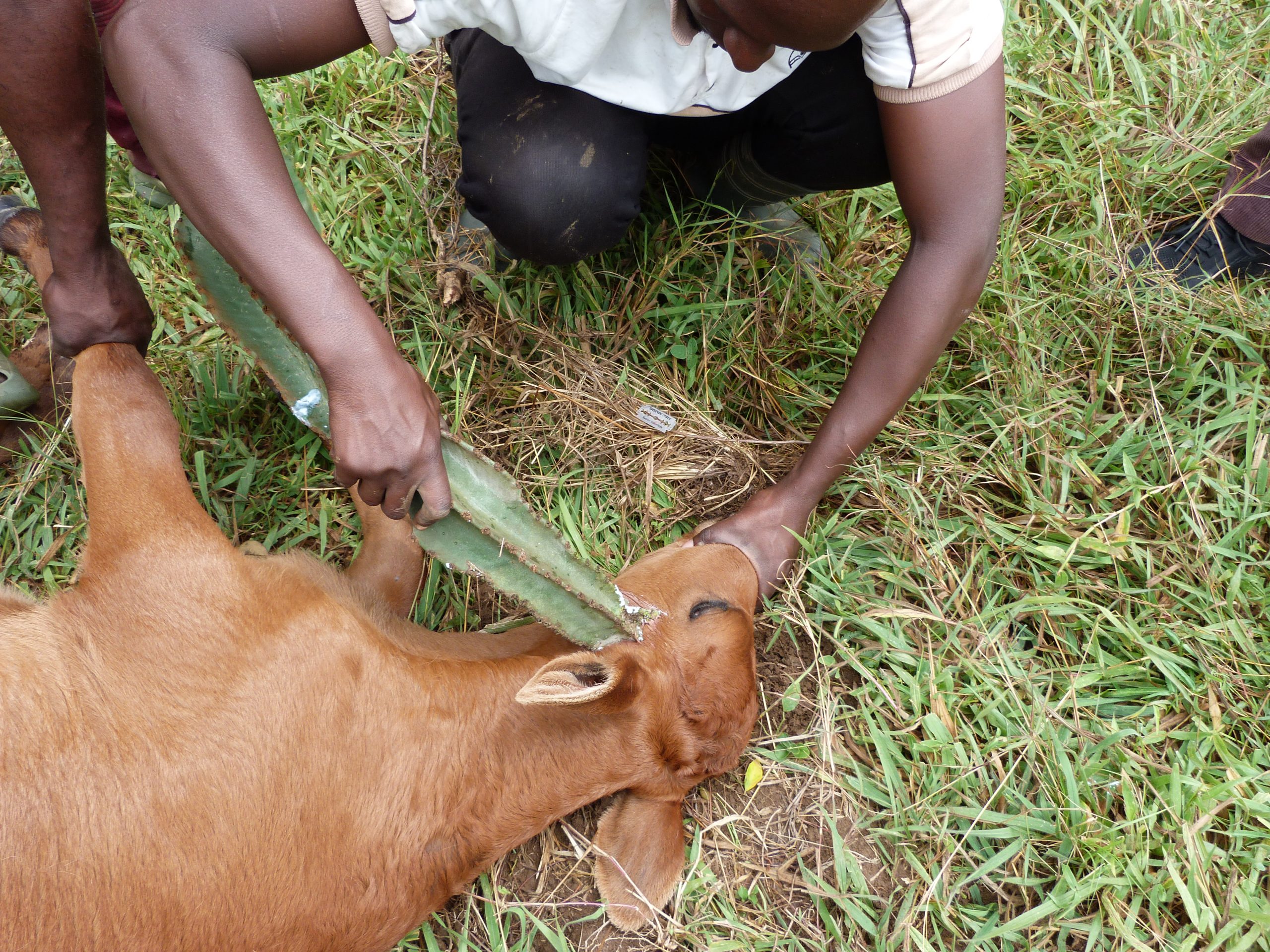
By Rashid Muhoozi of Sekama on a farm visit in Western Uganda.
On Stella’s farm in Western Uganda, a cactus tree caught our attention. While these trees aren’t usually recommended for farms due to lightning risks or potential eye injuries from the sap, they have an important traditional use: healing livestock.
East Coast Fever, known locally as Amashuyo in Runyankole, is a common tick-borne disease caused by the brown ear tick (Theileria parva). It presents with high fever and swollen lymph nodes, particularly around the neck and under the ears.
Farmers have long used cactus sap to control these symptoms. The process involves gently restraining the animal and making a small, controlled cut in the swollen lymph nodes. Fresh cactus pads are then sliced, and the sap is applied directly to the wound (see photo).
The results are remarkable. The sap stops bleeding, reduces swelling, and brings the animal’s fever back to normal. For generations, this natural remedy has saved countless cattle from the worst effects of the disease.
While modern veterinary medicine offers new treatments, the cactus tree remains a valuable part of traditional livestock care; a testament to the power of natural remedies in African farming.